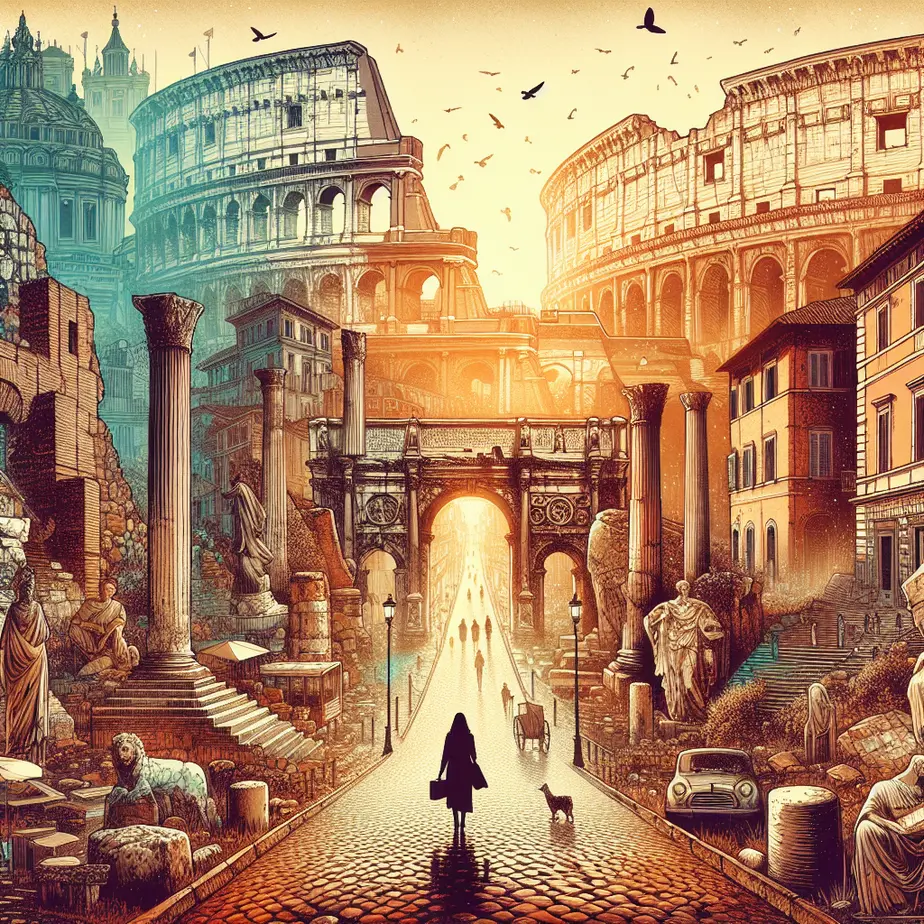
Rome, the eternal city, is a captivating blend of ancient history and modern vibrancy. It’s a place where the whispers of the past echo through its majestic ruins and age-old streets. For history enthusiasts and travelers alike, Rome offers a journey that transcends time, weaving together a tapestry of stories from bygone eras.
The Birthplace of a Civilization
Rome’s history is deeply rooted in the tale of its legendary founding by Romulus and Remus in 753 BC. This mythic origin story marks the beginning of a civilization that would ultimately lay the groundwork for Western culture and governance. Walking through the heart of Rome, one can still feel the presence of its ancient inhabitants and the monumental impact they had on architecture, art, and politics.
Exploring the Roman Forum: The Heart of Ancient Rome
The Roman Forum, once the epicenter of political and social life in ancient Rome, serves as a remarkable window into the world of Roman society. As you wander through its expansive ruins, you’re enveloped in a world where emperors made pivotal decisions, senators debated, and citizens engaged in commerce and worship.
The Colosseum: A Monument to Roman Ingenuity
No visit to Rome is complete without standing in awe before the Colosseum, a testament to the engineering prowess of the Romans. This iconic amphitheater, inaugurated in AD 80, hosted grand spectacles, gladiator contests, and public events. Its arches and vast construction remain a symbol of the architectural innovation that set Rome apart in antiquity.
Pantheon: A Marvel of Ancient Architecture
The Pantheon is one of Rome’s best-preserved ancient buildings, showcasing the ingenuity of Roman architectural design. Originally built in 27 BC and later reconstructed by Emperor Hadrian around AD 125, the Pantheon’s massive dome, with its central oculus, remains a marvel to be admired. Its harmonious proportions exemplify the Roman dedication to aesthetics and religious devotion.
Vatican City: A Spiritual and Historical Epicenter
Though Vatican City is an independent city-state and the spiritual center of the Roman Catholic Church, its history is intricately tied to that of Rome. From the awe-inspiring St. Peter’s Basilica to the ethereal beauty of the Sistine Chapel’s ceiling, visitors are immersed in a world of divine artistry and historical significance.
The Evolution of Roman Art and Sculpture
Rome’s art is a chronicle of evolution from the realistic depictions of the Roman Republic to the intricate details seen during the Renaissance. Masterpieces like Michelangelo’s sculptures and frescoes tell tales of divine inspiration, human struggle, and cultural triumph.
Analysis: The Influence of Ancient Rome on Modern Society
Modern society owes much to the innovations of ancient Rome. From legal systems to architectural advancements, Rome’s legacy endures. Consider the following influences:
- Architecture: The use of arches, domes, and the development of concrete.
- Law and Government: Concepts of a republic and codified legal principles.
- Language and Literature: The Latin language’s impact on modern languages and literature.
Preserving History: Challenges and Opportunities
Preserving Rome’s ancient history presents both challenges and opportunities. Conservation efforts strive to maintain these sites for future generations amidst modern development pressures. Balancing tourism with preservation is crucial to safeguarding Rome’s timeless allure.
Conclusion: A Journey Through Time Awaits
Rome is more than a city; it’s a journey through time for those who seek to connect with humanity’s past. Its ancient wonders offer not just a glimpse into history but an opportunity to reflect on the enduring legacy of a civilization that has shaped the world as we know it today.